

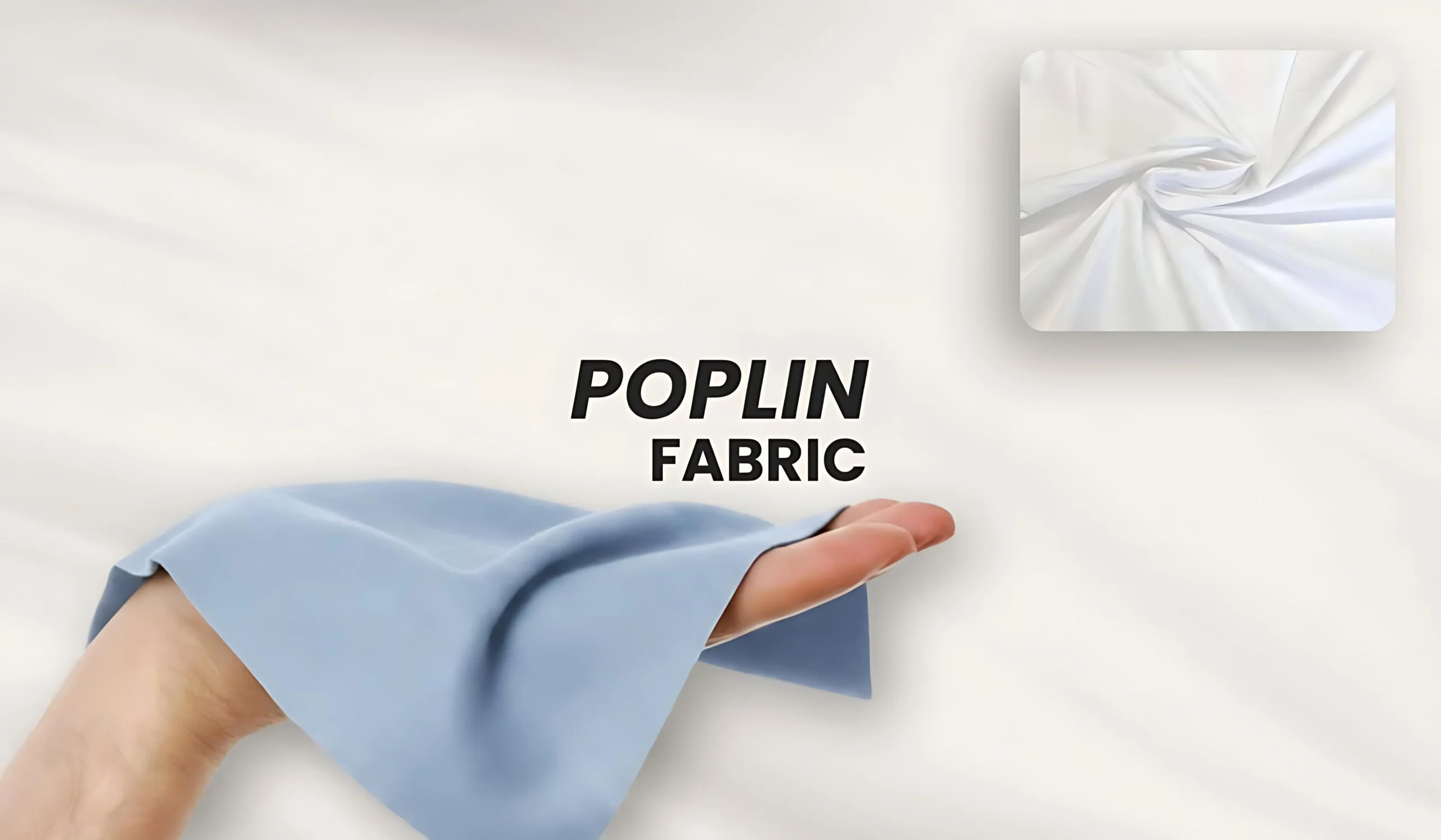
Introduction: What is Poplin Fabric?
Poplin fabric is often underappreciated as a classic fabric that you may not realize is, perhaps, an underappreciated classic fabric found within your closet and how you utilize it. It starts out cool as a lightweight summer dress, and ends up looking professional when worn with a fitted jacket at work. This fabric is created from a blend of fine and medium-weight cotton fibres.
Poplin fabric has a slight luster created from the differing thread densities on the length (narrow side) versus the width (wider side), creating a soft handfeel, even for the most basic items made from it (but really make anything look luxurious).
The yarns are finer along the length than along the width, creating a subtle ribbed effect and a nicer, less flashy, finish than other styles with their shiny finish. This is the Goldilocks of all the options in the fabric world!
Poplin fabric isn’t just a fad; it has an extensive and storied history. It was used for clothing by those who served as religious leaders, worn by those in military uniforms, and continues today as the fabric of choice for your shirts, albeit in a number of variations.
Where Poplin Actually Came From
Their story frequently began in 15th-century Avignon, a French city that was then a bustling trade hub during the popes’ temporary residency there. Legend has it that local weavers wove a silk-and-wool material they called “papelino” (little pope fabric) for the clergy’s clothing. This early iteration of Poplin Fabric utilized silk on the outside had a lustrous sheen, and the wool on the inside kept it snug. It was luxurious, heavy, and perfectly adapted for the church.
By the time of the Renaissance, European nobles had made the style their own. Gowns, doublets, tunics, and poplin provided the look of luxury without the weight of brocade.
A few hundred years later, during the Industrial Revolution, everything changed. British mills found they could mimic that ribbed look using cotton rather than silk or wool. Prices fell, making it affordable for the masses.
In the 1920s, British cotton poplin came to the United States, at which point, marketers decided that “poplin” sounded too thick and fusty in American ears, and labelled it “broadcloth.”
Then, during World War II, the U.S. military began using cotton poplin for warm-weather uniforms because it was lightweight, breathable, and durable.
Flash forward to the Industrial Revolution, and all that changed. British mills discovered they could achieve the same ribbed effect with cotton rather than silk or wool.
Prices dropped, and all of a sudden ordinary people could wear it. In Dublin, Irish weavers made a silk-warp, wool-weft version called tabinet that was essentially the designer poplin of its time.
In the 1920s, when British cotton poplin made its way to America, that fabric was marketed as “broadcloth” partly because poplin didn’t sound breathable enough and partly because it sounded too old-world — «poplin» derives from the French word for sleepiness — to New World ears.
Then came World War II and the U.S. military’s love of cotton poplin for tropical uniforms — also light, breathable, and tough enough to skip through jungle humidity.
After the war, Poplin Fabric saturated every market, from sportswear to home furnishings and everything in between. Today, you’ll even find organic and recycled iterations, nudging poplin back full circle to its better-for-the-planet (and our bodies) natural form.
The Big Turning Points
- 19th century: Cotton replaces silk/wool → mass production, affordable shirting is born.
- Early 20th century: Mercerisation (caustic soda bath) makes cotton poplin stronger, shinier, and better at holding dye.
- Mid-20th century: Polyester blends arrive → wrinkle-resistant poplin for uniforms and easy-care clothes.
- 21st century: Organic cotton, recycled polyester, low-impact dyes → greener footprint without sacrificing performance.
How Poplin Actually Gets Made
Poplin fabric is all about the contrasting play of warp and weft. You spin the warp yarns (the long ones) super fine and tight, then cross them with thicker, looser weft yarns. The warp covers the surface, so the fabric ends up smooth on top with tiny horizontal ribs you can feel more than see.
Most poplin today is 100% cotton, often long-staple Egyptian or Pima for extra softness, or cotton blended with a bit of polyester or elastane. Weaving happens on high-speed looms in a simple over-under plain weave, but the warp is packed roughly twice as dense as the weft (think 120 ends per inch vs. 60 picks). That ratio is what gives poplin its signature crispness.
After weaving, the fabric gets “finished.” They singe off fuzzy bits with gas flames, mercerise it for lustre and strength, dye or print it, then add whatever performance coatings the end use demands, wrinkle-free resins, water-repellent silicones, soft enzyme washes, you name it.
Why People Can’t Get Enough of Poplin
Poplin is recognized for being very light (typical weights of 120–135 grams per square meter), yet also provides structure to garments.
Poplin can also incorporate two opposing properties – breathable, moisture-wicking materials to help move sweat away from the body; an elegant drape; and smooth colour saturation/colour retention, in addition to its firmness/ability to hold crease markings.
Poplin Fabric offers much more potential for creating a cooler version of lighter-weight fabrics like voile. In contrast, Oxford shirts are much more adherent to the style requirements of exactness in regard to overall fit and finish than poplin shirts.
Thus, a poplin shirt made from high-quality Poplin Fabric delivers a polished appearance without causing the wearer to overheat in warm weather.
Where You’ll Find It Today
- Classic men’s dress shirts and women’s blouses (the reason most of us own poplin and don’t even realise it)
- Summer dresses, skirts, lightweight pyjamas
- Medical scrubs, chef coats, hotel uniforms
- Crisp bed linens, tablecloths, quilting backs
- Outdoor banners and flags (polyester poplin is rugged and prints vividly)
- High-end raincoats and windbreakers when treated with water-repellent finishes
The Many Flavours of Poplin
- Pure cotton poplin – soft, breathable, gets better with every wash
- Stretch poplin – 2–5% elastane for body-skimming dresses
- Silk poplin – glossy and flowy for evening pieces
- Poly poplin – cheap, no-wrinkle, lives in school uniforms
- Organic/recycled poplin – GOTS-certified, planet-friendlier
- Mercerised poplin – extra shiny and strong
- Enzyme-washed or “peached” poplin – buttery hand feel
The Not-So-Great Side (and What’s Changing)
Growing cotton is a very resource-intensive process that requires a massive amount of water (2,700 litres) to produce enough fabric for one T-shirt. Cotton dyeing processes use large quantities of water and chemical substances that pollute our environment through runoff. Polyester alternatives to cotton do not decompose when discarded and produce microplastics during washing.
Fortunately, for those who do not wish to compromise on quality or their environmental impact, Poplin Fabric made from organic cotton supports sustainable practices, as organic cotton farming has reduced pesticide use on cotton crops by 90% and water use during the cotton-growing cycle by 60%. The use of recycled polyester, sourced from discarded plastic bottles, also provides farmers with significant incentives to engage in regenerative agriculture.
Additionally, the demand for high-quality poplin continues to rise, as it is highly durable. Poplin should last well beyond 75 washes, and because of its durability, can easily be recycled many times before being disposed of. If poplin can be produced sustainably without compromising on quality, there are strong reasons for consumers to purchase quality items with the expectation that they will eventually be reused, rather than discarded.
Quick Comparison: Poplin vs. Twill vs. Gabardine
| Poplin | Twill | Gabardine | |
| Weave | Plain, fine rib | Diagonal lines | Tight, steep twill |
| Feel | Crisp & smooth | Soft, drapey | Firm & dense |
| Breathability | Excellent | Good | Okay |
| Wrinkles | Shows some | Hides them | Hides them best |
| Typical use | Dress shirts, summer pieces | Chinos, jackets | Trench coats, suits |
| Shine | Gentle sheen | Matte | Can be high |
For over 600 years, poplin has been a continuously produced fabric. It has remained popular around the world. Poplin is a medieval European-originating fabric that has gone through many variations and continues to be produced.
There was even a time when the majority of poplins were manufactured for the Papal courts in Rome. Nowadays, poplin can be found in many eco-friendly varieties and has been used to make everything from work uniforms to scrubs. So, whether you are in need of a lightweight summer dress or simply want a classic white button-down, poplin will meet all your fabric needs.
Few fabrics have lasted through time as Poplin Fabric has. From the Renaissance to the present, poplin has been worn by priests and soldiers from all regions of the world, suffered through the smoke of industrial factories, the dirt and mud of the jungle, and still continues to look great into 2025.
Poplin Fabric is an extremely quiet and versatile material and seems to always be able to carry on, withstanding generations of wear and tear.
Next time you wear a crisp white dress shirt or light summer dress, take just a moment to recognize how special this fabric is and give a little appreciation for it. It has had a long, successful history and has earned the right to be remembered.
References
- Kadolph, S. J. (2017). *Textiles* (11th ed.). Pearson.
- Sinclair, R. (Ed.). (2014). *Textiles and fashion: Materials, design and technology*. Woodhead Publishing.
- Kadolph, S. J. (2020). *Textiles* (12th ed.). Pearson.
- Fashionary International Limited. (2015). *Textilepedia: The complete fabric guide*. Fashionary.
- Better Cotton Initiative. (2023). *Field-level results 2023*. https://bettercotton.org
- Textile Exchange. (2024). *Organic cotton market report 2024*. https://textileexchange.org
- U.S. Cotton Trust Protocol. (2023). *Annual sustainability report*. https://thetrustprotocol.com
- World Wildlife Fund. (2022). *Cotton: Industries*. https://www.worldwildlife.org/industries/cotton
- International Institute for Sustainable Development. (2023). *Global market report: Cotton prices and sustainability*. https://www.iisd.org
- Microban. (2022). *DuraTech antimicrobial cotton study*. Textile World.
- Patagonia. (2024). *Sustainable cotton sourcing report*. https://www.patagonia.com
- Cotton Incorporated. (2023). *Sustainability report*. https://www.cottoninc.com
Wanna get in touch with us. You can also Book a 1-on-1 Call Session BOOK NOW
Programs
- If you are exploring the idea of starting a fashion brand – Join the Masterclass
- If you are 100% sure of launching a clothing brand or are in the process of launching a clothing brand – Join the Bootcamp
- If you are looking for low MOQ supplier, inquire about the Co-pilot program.
- If you have a private label brand and you are looking to scale up – Join our Private Label Program.
- If you are looking for surplus & Liquidation deals – join our liquidation program.
- If you are not sure about joining the bootcamp, – Join the Masterclass to get a feel of what Bootcamp has to offer and if you still have questions, you can email us at hello@hulaglobal.com
Read more