

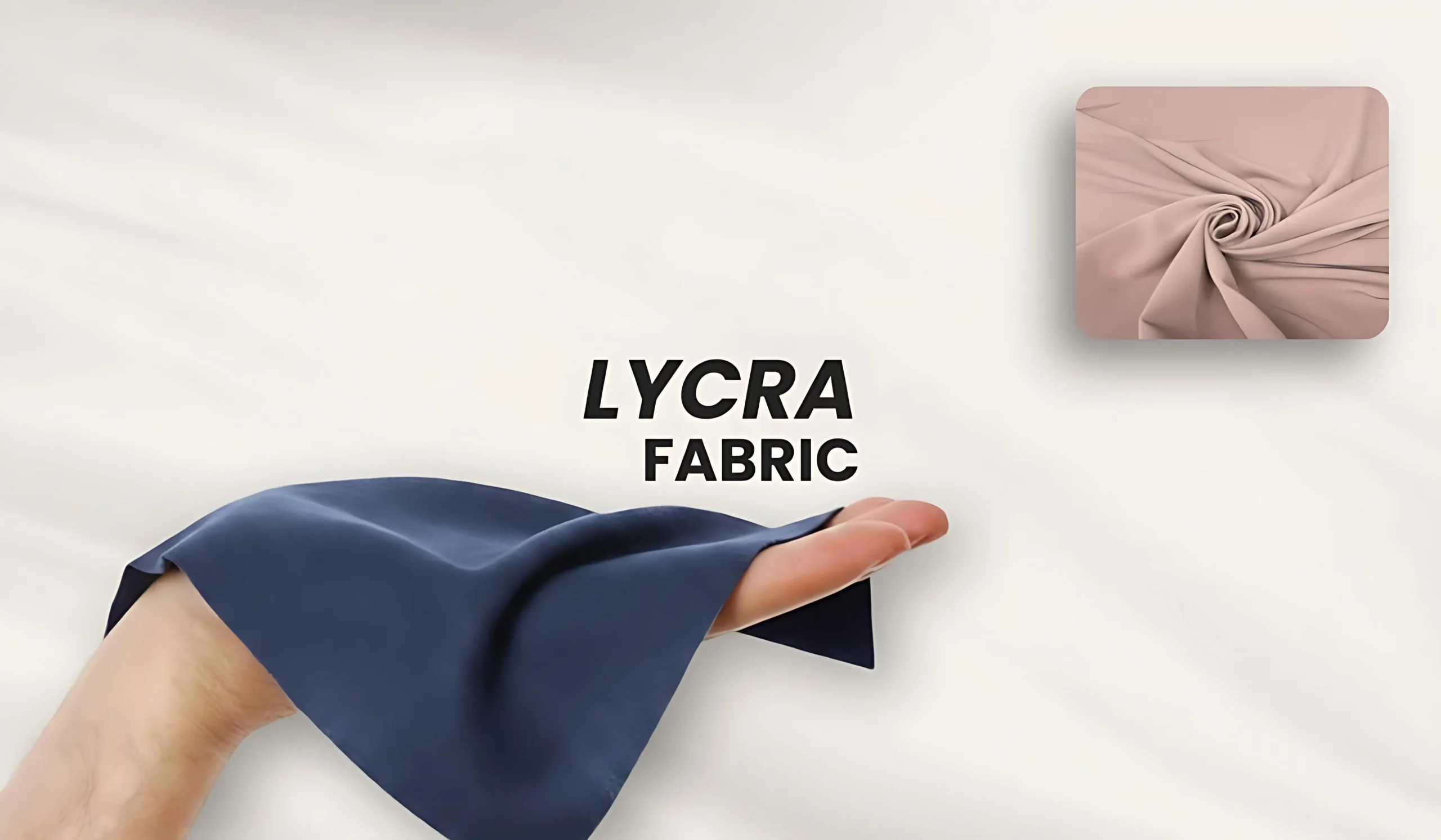
Introduction: What is a lycra fabric?
Lycra, also known as spandex or elastane, is a highly stretchable synthetic fiber celebrated for its exceptional elasticity. It belongs to the polyurethane family, and what truly sets it apart is its ability to stretch up to several times its original length and effortlessly snap back without losing its shape. This remarkable recovery makes Lycra one of the most comfortable, durable, and movement-friendly fibers used in textiles today.
Compared to natural rubber, Lycra is lighter, stronger, and far more comfortable on the skin. It doesn’t degrade easily, lasts longer, and blends beautifully with other fibers, which is why it has become a core ingredient in modern clothing, sportswear, performance gear, medical textiles, and even technical industrial products.
History of Lycra
The story of Lycra goes back to the period after World War II, when textile companies across the world started looking for smarter, lighter, and more durable alternatives to natural rubber.[1] Rubber worked well for stretch, but it had limitations; it broke down easily, lost elasticity with time, and couldn’t keep up with the growing need for high-performance clothing.[2]
During the 1940s and 1950s, researchers began exploring polyurethane-based materials to create a fiber that could stretch like rubber but last much longer. This led to a series of experiments in polymer labs around the world, but early versions of the fiber weren’t stable enough to be used in textiles.
A major shift happened when Dr. Joseph Shivers at DuPont’s Benger Laboratory in Waynesboro, Virginia, developed a stable, reliable segmented polyurethane fiber. His breakthrough was patented in 1958, and the fiber made its official commercial debut in 1962 under the now-famous name “Lycra”.[3][4][5]
Once Lycra hit the market, it changed fashion almost immediately:
1960s: It replaced rubber in women’s shapewear and foundation garments.[3]
1970s-1980s: The fitness and swimwear boom increased its demand worldwide.[6]
1990s onward: Stretch denim, athleisure, and performance sportswear made Lycra an everyday essential. [7]
Today, Lycra is one of the most widely used elastic fibers in the global textile industry. Its stability, comfort, and long-term durability have made it indispensable in everything from casual clothing to medical textiles.
Origin
The fiber originated in the late 1950s during an era when the textile industry was seeking an alternative to rubber, which was heavy, less durable, and prone to degradation.
Chemists began experimenting with segmented polyurethane chains, eventually creating a lightweight fiber that could stretch several times its length and instantly return to its original shape. This innovation marked the birth of elastane fibers, which later became commercially popular under various trade names.[5]
Evolution
Initially developed for applications that required superior elasticity, such as women’s foundation garments and sportswear, Lycra rapidly expanded across multiple textile categories.
Over the decades, the fiber evolved through improvements in polymer chemistry, spinning technologies, and heat-setting processes. Modern elastane is more resistant to sweat, oils, and detergents, and it offers smoother blending with cotton, polyester, nylon, viscose, and other fibers.
Key Innovations That Shaped Lycra as a Fiber
1. Segmented Polyurethane Chemistry
The introduction of a segmented polymer structure allowed the fiber to exhibit “elastomeric” behavior, stretching up to 500-700% without permanent deformation.
2. Solution Dry Spinning Technology
This method improved the uniformity and strength of elastane filaments, enabling finer deniers and versatile use in everything from lingerie to industrial textiles.
3. Core-spinning and Covered-Yarn Techniques
These innovations allowed elastane to be wrapped or combined with other staple or filament fibers, resulting in fabrics that look natural but behave elastically.
4. Heat-Set Recovery Stabilization
This advancement enhanced durability, enabling elastane to withstand repeated stretching, washing, and exposure to chemicals.
Manufacturing Process of Lycra
Lycra is created through a carefully controlled chemical and mechanical process that turns liquid polymers into strong, elastic fibers. Even though the technology behind it is advanced, the process can be understood in four clear stages: polymer preparations, spinning, drawing, and final finishing.
1. Polymer Preparation: Creating the Base Material
The process begins with the formation of a prepolymer, which is the foundation of Lycra. This mixture is made by reacting two main ingredients:
A long-chain, flexible polymer that gives the fiber its stretch and a diisocyanate compound that adds structure and strength.
These components are blended in controlled conditions until they form a thick, viscous solution. This liquid contains the essential “soft” and “hard” segments that will eventually give Lycra its unique elasticity.
2. Fiber Formation (Spinning)
Once the prepolymer is ready, it goes through a step called solution spinning, the most common technique used for Lycra.
The polymer solution is pushed through a spinneret, a small metal plate with tiny holes. As it passes through the holes, the liquid forms long, continuous filaments. These filaments enter a warm chamber where a controlled stream of air removes the solvent and solidifies the fiber.
This step determines the thickness, strength, and uniformity of the Lycra filament. Because the process involves liquid-to-solid transformation, manufacturers can produce very fine or slightly thicker fibers, depending on the fabric’s purpose.
3. Drawing and Heat-Setting
After the fibers are formed, they go through a stretching process called drawing.
During drawing, the fibers are gently pulled several times their original length. This aligns the polymer segments inside the fiber, and the alignment improves elasticity, recovery, and strength.
Once drawn, the fibers are heat-set, a step where controlled heat locks the internal structure in place. This ensures that the fiber can stretch repeatedly without losing its shape or snapping.
4. Finishing and Winding
Before the fibers are packaged, they receive a light finishing treatment, a small amount of lubricant or silicone to reduce friction during weaving or knitting, anti-static finishing to avoid cling, and surface smoothing for better blending with other yarns.
Finally, the continuous filaments are wound onto spools. From here, they are ready to be blended with cotton, polyester, nylon, or other fibers, because Lycra is almost always used as part of a blend, not as a standalone yarn.
5. Integration Into Fabrics
Lycra is typically used in small percentages (often 2-10%) but has a major impact on fabric performance. There are two main ways it is integrated:
- Knitting: Used for leggings, activewear, innerwear, and swimwear, giving fabrics a smooth stretch.
- Weaving: Used for stretch denim, trousers, uniforms, and outerwear where controlled, directional stretch is needed.
Even a small amount of Lycra can change the entire feel of the garment, making it more flexible, better fitting, and more resistant to wear and tear.
Properties and Characteristics
Lycra is known for its exceptional stretch, but its performance goes far beyond simple elasticity. The fiber has a combination of qualities that make fabrics more comfortable, durable, and body-responsive.
1. Exceptional Stretch and Recover
The most defining feature of Lycra is its ability to stretch up to five to seven times its original length and immediately return to shape. This is of fit, even after repeated use.
2. Lightweight but Strong
Despite being extremely light, Lycra has high tensile strength. A very small percentage blended into other fibers is enough to significantly improve the overall durability and flexibility of the fabric.
3. Smooth, Soft Fell on Skin
Lycra fibers are thin, uniform, and naturally smooth, which makes them gentle against the skin. They do not cause irritation or friction, and they blend seamlessly with fibers like cotton, polyester, viscose, and nylon without altering their softness. This is why Lycra is commonly used in innerwear, sportswear, medical compression garments, and clothing meant for prolonged wear.
4. Wrinkle Resistance
Fabrics with Lycra recover quickly after movement and do not crease easily. This is why Lycra-blended garments maintain a polished look throughout the day.
5. Shape Retention
Garments with Lycra don’t lose their silhouette. Whether it’s leggings, denim, or shapewear, the fiber holds the garment’s structure beautifully, even after multiple washes.
6. Comfort and Freedom of Movement
Lycra stretches in multiple directions (depending on how the fabric is constructed), offering fluid movement for sports, dance, workout wear, and everyday clothing. This flexibility makes Lycra a top choice for high-performance apparel.
7. Breathability and Moisture Management
Although Lycra itself isn’t a breathable fiber, it is almost always stretch while allowing the main fiber (like cotton or polyester) to maintain ventilation and moisture-wicking properties.
8. Resistance to Sweat, Oils, and Lotions
Lycra naturally withstands damage from body oils, sweat, sunscreen, and everyday detergents. This resistance keeps the fiber functional and intact even in demanding conditions, such as sportswear, innerwear, and swimwear, where the fabric is exposed to heat, moisture, and repeated friction.
9. Chlorine and UV Resistance (Varies by Grade)
Certain grades of Lycra Offer improved Chlorine Resistance for swimwear and protection from ultraviolet exposure, especially important for outdoor and performance-focused applications.
10. Easy Care and Low Maintenance
Lycra-blended fabrics are simple to wash, fast to dry, and maintain their stretch for a long time without special treatment. They also resist pilling, making them ideal for daily wear.
Applications of Lycra
Lycra’s ability to stretch, recover, and blend effortlessly with other fibers makes it one of the most versatile materials in the textile industry. Its uses span everyday fashion, performance apparel, medical textiles, and even industrial products where controlled elasticity is essential.
1. Apparel and Fashion
Lycra plays a quiet but powerful role in modern clothing. In everyday wear, it helps garments fit better, move comfortably, and keep their shape longer. Stretch denim is a perfect example; a small percentage of Lycra transforms still jeans into flexible, body-friendly denim that moves with the wearer. Tops, dresses, trousers, and chinos often use Lycra to add ease of movement without compromising style.
It is equally important in innerwear. Bras, panties, shapewear, camisoles, and hosiery depend on Lycra for a smooth stretch and supportive fit. Because the fiber is soft and lightweight, it blends easily with cotton or nylon to create fabrics that stay comfortable throughout the day.
2. Activewear and Performance Clothing
The sportswear industry relies heavily on Lycra because it supports a full range of motion without losing shape. Leggings, yoga pants, running shorts, cycling gear, gym tops, swimsuits, and sports bras all use Lycra for flexibility and recovery. The fiber retains its strength even after sweating, stretching, and frequent washing, making it ideal for high-performance conditions.
In swimwear, Lycra helps fabrics hug the body, resist sagging, and maintain fit even after exposure to water, sun, and movement. Advanced grades of the fiber offer improved chlorine resistance, making swimsuits last longer in pools.
3. Medical and Healthcare Textiles
Lycra’s controlled elasticity makes it suitable for medical applications where compression, support, or circulation management is required. It is used in:
- Compression stockings
- Post-surgical garments
- Joint supports and braces
- Bandages with stretch properties
These products rely on Lycra’s ability to deliver firm yet comfortable pressure without slipping or losing shape during use.
4. Workwear and Uniforms
Modern workwear often includes a small amount of Lycra to improve mobility and comfort. Stretch uniforms, formal trousers, lab coats, and industrial clothing benefit from its durability and flexibility. Workers who need to bend, stretch, or remain active throughout the day experience better ease of movement because of this fiber.
5. Industrial and Technical Uses
Beyond fashion and apparel, Lycra serves several specialized functions:
- Flexible cords and tapes
- Stretch panels in footwear
- Elastic components in automotive textiles
- Reinforcement in upholstery fabrics
In these applications, Lycra’s strength and elasticity help maintain form and performance where repeated stress or stretching occurs.
6. Home Textiles
Although less common, Lycra also appears in certain home textile products such as fitted bedsheets, mattress covers, stretch sofa covers, and cushion wraps. Its elasticity ensures a smooth, wrinkle-free fit on shaped surfaces.
Types and Variations of Lycra
Lycra may look like a single fiber from the outside, but it comes in multiple variations designed for different performance needs. Each type is engineered with a specific purpose, whether it’s deep stretch for activewear, firm support for shapewear, or balanced comfort for everyday clothing.
1. Regular Lycra ( Standard Elastane)
This is the most commonly used version and appears in a wide range of garments. It provides smooth stretch, good recovery, and blends easily with cotton, polyester, nylon, and viscose. Everyday leggings, T-shirts, denim, and innerwear typically use this grade.
2. High-Stretch Lycra
Designed for garments that need greater elasticity, this version delivers a stronger, more responsive stretch. You’ll often find it in sportswear, dancewear, swimwear, and fitted performance clothing, where unrestricted movement is essential.
3. Power Lycra/ High-Power Elastane
This is a firmer, more supportive type that offers controlled compression. It’s used in shapewear, slimming garments, medical compression stockings, and athletic gear that requires targeted muscle support. The fiber feels stronger and more structured compared to standard Lycra.
4. Chlorine-Resistant Lycra
This variation is engineered for swimwear and water sports. It resists chlorine degradation, sunscreen, and saltwater exposure, helping swimsuits maintain saltwater exposure, helping swimsuits maintain their fit and elasticity for a longer time, especially in pool environments where regular elastane breaks down quickly.
5. Heat-Resistant or High-Temperature Lycra
Used in technical garments or industrial applications, this type can withstand higher temperatures without losing its stretch. It is useful in workwear, protective clothing, and fabrics that go through intense heat-setting or dyeing processes.
6. Lightweight Lycra
This finer version of the fiber is designed to blend into delicate fabrics like lingerie, hosiery, and lightweight innerwear. It offers stretch without adding bulk, making garments feel soft, breathable, and barely noticeable on the skin.
7. Textured or Air-Covered Lycra
In this variation, the Lycra core is wrapped with another fiber (usually nylon or polyester). This creates a soft, slightly textured yarn that looks and behaves more like a natural fabric but retains the elasticity of Lycra. It’s used in leggings, socks, athleisure wear, and garments requiring a more “ cotton-like” feel.
8. Weave-Based Variations
While Lycra itself doesn’t have different “weaves,” the way it is integrated into fabrics creates distinct performance effects:
- Two-way stretch fabrics stretch horizontally.
- Four-way stretch fabrics stretch both horizontally and vertically.
- Wrap-knit fabrics (like tricot used in swimwear) give controlled, smooth stretch.
- Weft-knit fabrics allow softer, more relaxed stretching for daily wear.
These construction methods change how the Lycra behaves, even if the fiber is the same.
9. Blended Variants
Many styles of Lycra depend on what fibers they are blended with:
- Cotton+ Lycra: everyday basics with comfort stretch
- Polyester+ Lycra: activewear, swimwear, athleisure
- Nylon+ Lycra: hosiery, lingerie, premium fitness wear
- Viscose+ Lycra: dresses, tops, office wear with soft drape
The blend combination can completely change the feel, function, and performance of the finished fabric.
Environmental Impact of Lycra Fabric
Lycra, also known as spandex or elastane, is widely used because of its exceptional stretch and recovery, but its environmental footprint raises concerns. Since Lycra is a synthetic fiber made from petroleum-based chemicals ( polyurethane), its production is energy-intensive and dependent or non-renewable resources.
The manufacturing process involves toxic solvents and chemicals, which can contribute to air and water pollution if not managed properly.
Another major issue is microplastic pollution. When garments containing Lycra are washed, they release microfibers into water bodies. These microplastics do not biodegrade and can accumulate in aquatic environments, harming marine life and later entering the human food chain.
Lycra is also non-biodegradable, meaning it can persist in landfills for hundreds of years. Because Lycra is usually blended with other fibers like cotton, polyester, or nylon, recycling becomes even more difficult. Most blended fabrics cannot be separated easily, so they are rarely recycled and often end up as waste.
On the sustainability side, some improvements are emerging. Companies are developing recycled elastane made from pre-consumer waste, and cleaner production technologies help reduce chemical use and carbon emissions. Innovations like bio-based elastane and closed-loop manufacturing aim to reduce reliance on fossil fuels and lower pollution.
Sustainable brands are also using Lycra more responsibly, adding small percentages only where stretch is necessary to extend garment life.
Basically, while Lycra remains environmentally challenging, advancements in recycling, eco-friendly production, and smarter fabric blends are slowly making its use more sustainable.
Comparison Table: Traditional Lycra vs. Recycled/ Sustainable Lycra
| Feature | Traditional Lycra(Spandex/ Elastane) | Recycled/ Sustainable Lycra |
| Raw Material | Made from petroleum-based chemicals(polyurethane). | Produced from pre-consumer waste or bio-based sources. |
| Environmental Impact | High carbon footprint; involves chemical-intensive production. | Lower environmental load; cleaner processes reduce emissions. |
| Waste & Pollution | Releases microplastics during washing; non-biodegradable. | Designed to reduce shedding and overall waste; slightly better in landfill impact. |
| Recyclability | Difficult to recycle, especially when blended with other fibers. | More compatible with recycling systems developed by eco-brands. |
| Durability | Strong stretch and recovery; long-lasting. | Similar performance, though some versions may have slightly lower elasticity. |
| Cost | Affordable and easily available. | More expensive due to sustainable production methods. |
| Industry Adoption | Used across sportswear, innerwear, denim, and everyday apparel. | Growing in activewear and premium brands focused on sustainability. |
Conclusion
Lycra has become an essential part of modern textiles because it brings comfort, flexibility, and longevity to a wide range of garments. Its ability to blend seamlessly with other fibers has allowed designers and manufacturers to achieve better fit and performance than traditional fabrics could offer on their own.
At the same time, the industry is becoming more aware of the environmental cost of synthetic materials, and this has pushed brands and manufacturers to look for cleaner, more responsible alternatives.
While sustainable or recycled versions of Lycra are still developing, they represent an important step toward reducing waste, lowering emissions, and creating a more mindful production system.
As consumers continue to demand comfort without compromising the environment, the future of Lycra will depend on innovations that balance performance with responsibility. In that sense, Lycra’s story is not just about stretch; it is about how the textile sector adapts to new expectations and evolves with time.
Wanna get in touch with us. You can also Book a 1-on-1 Call Session BOOK NOW
Programs
- If you are exploring the idea of starting a fashion brand – Join the Masterclass
- If you are 100% sure of launching a clothing brand or are in the process of launching a clothing brand – Join the Bootcamp
- If you are looking for low MOQ supplier, inquire about the Co-pilot program.
- If you have a private label brand and you are looking to scale up – Join our Private Label Program.
- If you are looking for surplus & Liquidation deals – join our liquidation program.
- If you are not sure about joining the bootcamp, – Join the Masterclass to get a feel of what Bootcamp has to offer and if you still have questions, you can email us at hello@hulaglobal.com
Read more
- Iconic Products Made from Leather Jacket
- How To Start A Fashion Brand?
- Top 10 Couture Brands
- What is fabric costing
- The Benefits of Fast Fashion
- How Big of a Deal is the Supply Chain?
- Top 20 Expensive Clothing Brands
NOTES
- https://www.fulgar.com/en/feature/191/what-is-spandex-history-of-spandex
- https://pubsapp.acs.org/cen/whatstuff/stuff/7707scitek4.html
- https://one.lycra.com/en/lycra-about-lycra-fiber/see-how-lycra-fiber-has-shaped-world
- https://en.wikipedia.org/wiki/Joseph_Shivers
- https://en.wikipedia.org/wiki/Spandex
- https://www.thelycracompany.com/en/lycra-about-lycra-fiber/see-how-lycra-fiber-has-shaped-world
References:
- https://en.wikipedia.org/wiki/Joseph_Shivers
- https://en.wikipedia.org/wiki/Spandex
- https://www.mdpi.com/2071-1050/17/8/3319
- https://textilenotes.com/production-properties-applications-of-spandex-fiber/
- https://hoosens.com/blog/what-is-spandex-fabric-the-ultimate-breakdown-of-its-production-and-benefits/
- https://www.fibre2fashion.com/market-intelligence/texpro-textile-and-apparel/textile-guide/10536/spandex-fabric
- https://www.trvst.world/sustainable-living/fashion/lycra-fabric-and-sustainability/
- https://impactful.ninja/how-sustainable-are-lycra-fabrics/
- https://www.thelycracompany.com/en/lycra-about-lycra-fiber/see-how-lycra-fiber-has-shaped-world
- https://maake.com/blogs/fabric/what-is-lycra