

Introduction: What is Satin Fabric?
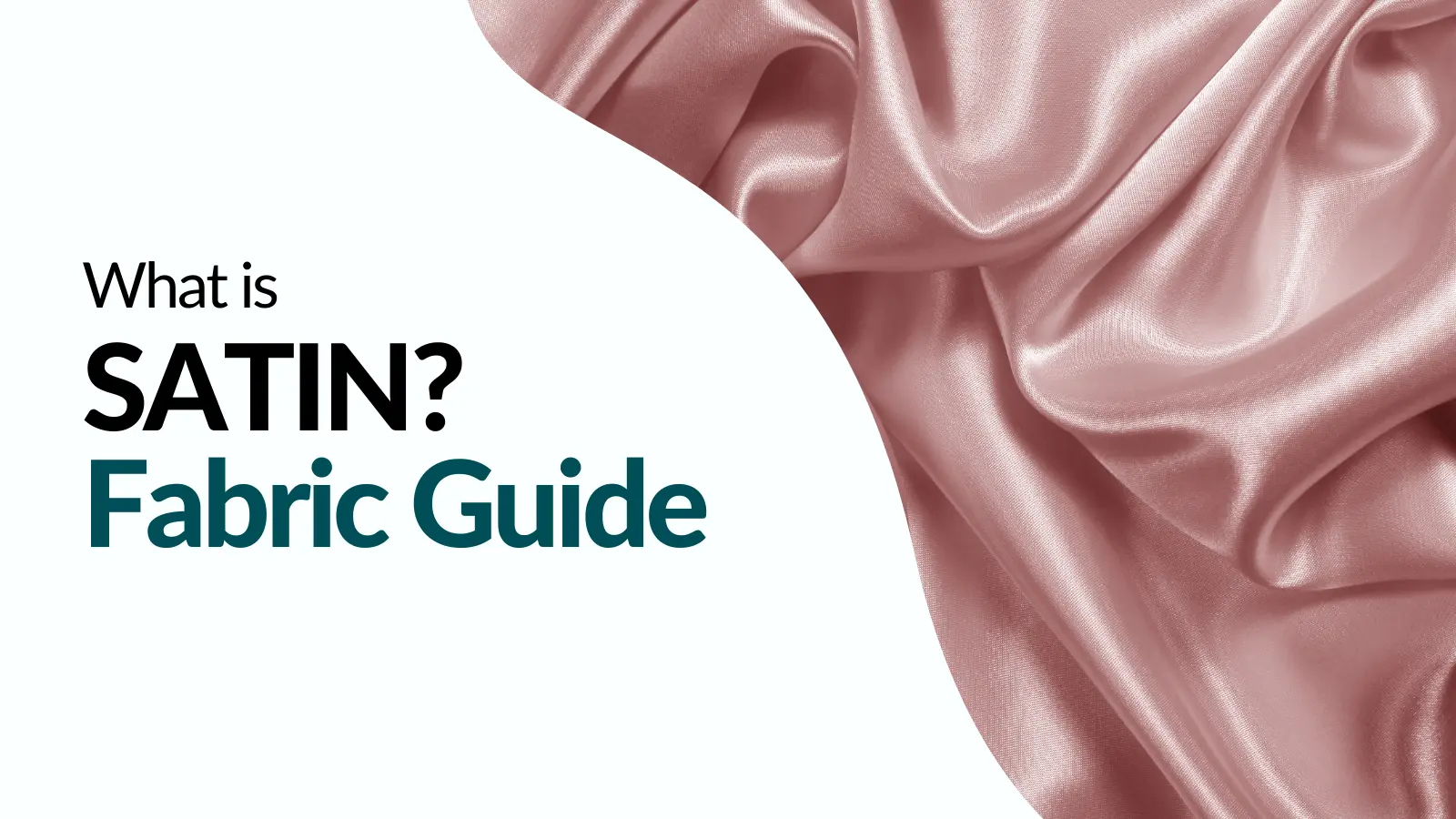
Satin has this effortless glamour, the way it catches the light and drapes like liquid. It’s one of those fabrics that instantly elevates whatever it’s made into, whether that’s a slinky evening gown or a set of luxurious bed sheets.
But satin isn’t actually a fibre on its own; it’s a weave structure that creates the signature glossy face and a softer, duller back. You can make satin from silk, polyester, nylon, or even cotton (though cotton versions are technically called sateen).
The magic comes from long “floats” in the weaving where one set of yarns skips over several others, reflecting light beautifully on one side.
History of Satin Fabric
Satin Fabric’s story starts over two thousand years ago in China, where silk weaving was already a finely honed art. The exact origins of the satin weave are tied to medieval Chinese ports, particularly Quanzhou (known to Arab traders as Zaitun or Zayton), which is where the European name “satin” comes from.
Origin: The weave likely emerged during the Tang or Song dynasties (7th–12th centuries), though silk itself dates back to Neolithic China, around 4000 BCE. Early Chinese satins were made exclusively from silk filaments and reserved for imperial robes and high-status garments.
Evolution: As the Maritime Silk Road expanded, silk reached the Middle East and then Europe by the 12th-14th centuries. It was outrageously expensive, often worth more than gold, and worn only by royalty and the aristocracy.
By the Middle Ages in Europe, Italian and French weavers were producing their own versions, though China continued to make the finest silk satins.
Key innovations: The spread of the Jacquard loom in the 19th century allowed intricate patterned satins. In the 20th century, synthetic fibres like nylon (1930s) and polyester (1940s) democratised satin, making affordable, durable satin available worldwide. Today, China is again the dominant producer, but innovations like recycled polyester satins are emerging.
Manufacturing Process of Satin Fabric
Making satin is all about precision to get those long floats just right without weakening the cloth too much.
Fibre selection: Traditionally, long-filament silk is used for Satin Fabric to achieve maximum lustre and softness. Modern versions of Satin Fabric often use polyester or nylon filaments (cheaper and stronger) or rayon. Short-staple fibres, such as cotton, are used for sateen rather than true Satin Fabric.
Weaving process: Satin is almost always warp-faced (warp floats on the surface). The classic structure is 4/1 (four warp yarns float over one weft) or higher (5/1, 7/1, 8/1). The “move” or step between floats must be irregular to avoid visible twills. High-speed air-jet or rapier looms are standard today; historically, hand looms or early power looms were.
Finishing techniques: Scouring to clean, bleaching if needed, dyeing (piece or yarn dyed), and crucially, calendaring, running the fabric through heated rollers to flatten and polish the surface for extra shine. Some satins receive additional treatments, such as anti-static finishes or embossing.
Properties & Characteristics
In short, satin feels indulgent against the skin but can be fussy – silk breathes and regulates temperature beautifully, while polyester versions feel a bit plastic-y and trap heat.
| Property | Description | Typical Performance |
| Luster/Sheen | High on face side due to long floats reflecting light; dull matte back | Excellent (silk best, polyester very good) |
| Drape | Fluid and heavy, falls beautifully | Outstanding |
| Hand/Feel | Silky-smooth, cool, luxurious | Very soft (silk > charmeuse > polyester) |
| Durability/Strength | Good tear strength but long floats make it prone to snagging and pulls | Moderate-high (polyester strongest) |
| Breathability | Varies by fiber – silk excellent, polyester poor | Silk high, synthetics low |
| Wrinkle resistance | Fair to good; heavier duchesse types resist best | Moderate |
| Care | Silk: dry-clean or gentle hand wash; polyester: machine washable | Varies widely |
| Snag/prone to runs | High risk because of floats | Common issue |
Applications
Satin shows up everywhere luxury or smoothness is wanted:
Fashion: Evening gowns, bridal wear, lingerie, blouses, linings, ties, ballet pointe shoes (the classic pink “satin” is actually reinforced canvas covered in satin).
Home textiles: Bed sheets and pillowcases (for a cool, hair-friendly sleep surface), duvet covers, curtains, and upholstery.
Industrial/other: Ribbon, athletic wear linings, flags/banners, theatrical costumes, and even medical drapes in some cases.
Variations/Types
There are dozens of named satins, but the main distinctions come from weight, fibre, and exact weave:
Silk satin: The original, pure luxury.
Charmeuse: Lightweight, drapey silk (or poly) satin with a shiny face and slight crepe-like dull back.
Crepe-back satin (reversible satin): Shiny satin on one side, matte crepe texture on the other. Great for dresses that call for contrast.
Duchesse satin: Heavy, stiff, high-lustre; classic bridal satin that holds shape.
Baronette satin: Rayon face, cotton back – affordable with good shine.
Sateen: Cotton version; softer and more matte than true satin.
Slipper satin: Dense and slightly matte, often used for shoes.
Double-faced satin: Shiny on both sides.
Environmental Impact & Sustainability
Satin’s eco-friendliness depends entirely on the fibre:
Silk satin: Natural and biodegradable, but sericulture uses significant water and energy; conventional silk farming has ethical concerns (most silkworms are killed). Peace silk or organic options are better.
Polyester/nylon satin: Petroleum-based, high carbon footprint, microplastic shedding, non-biodegradable. Recycled polyester versions are a significant improvement.
Rayon/viscose satin: Semi-synthetic from wood pulp; can be sustainable if sourced responsibly (FSC-certified), but chemical-heavy production is polluting unless closed-loop.
Overall lifecycle: Most mass-market satin today is polyester and ends up in landfills. Emerging alternatives include Tencel/lyocell satin (closed-loop, biodegradable) and organic cotton sateen.
Look for GRS-certified recycled polyester satin or organic/peace silk if sustainability matters to you.
Comparison Table: Satin vs. Similar Glossy Fabrics
| Fabric | Weave Type | Typical Fiber | Sheen | Drape | Durability | Breathability | Price |
| Satin | Satin (floats) | Silk/polyester | Very high | Excellent | Moderate | Varies | Medium-high |
| Sateen | Sateen (weft floats) | Cotton | Medium | Very good | High | High | Low–medium |
| Charmeuse | Lightweight satin | Silk/poly | High | Liquid | Low–moderate | Good (silk) | Medium–high |
| Taffeta | Plain (crisp) | Silk/poly | High crisp | Stiff | Good | Low | Medium |
In the end, there’s just something magical about satin, isn’t there? That soft, shiny glow and the way it feels like a little hug against your skin… It’s been turning heads and stealing hearts for centuries, from royal palaces to cozy bedrooms all over the world.
Whether it’s a jaw-dropping evening dress that makes you feel like a movie star, silky lingerie that feels like a secret treat, or pillows and curtains that turn a room into pure luxury—satin never goes out of style.
At Hula Global, we’ve been totally in love with this fabric for years. We pour our heart into every stitch, making sure each piece feels as gorgeous as it looks.
Looking for a stunning satin gown that’ll stop traffic or some dreamy bedding that makes bedtime feel like a five-star hotel? We’ve got you, and we promise it’ll be beautiful, top-quality, and actually affordable.
Fun fact: our super-soft satin camisoles are under $5 a piece, and our full sleepwear sets? Still under $10! Plus, you only need 100 pieces per color and design to get started—no crazy big orders required.
Satin isn’t just a fabric; it’s that quiet kind of luxury that makes everyday moments feel special. And honestly? We think it’s here to stay, keeping us all a little more glamorous, one silky touch at a time.
Wanna get in touch with us. You can also Book a 1-on-1 Call Session BOOK NOW
Programs
- If you are exploring the idea of starting a fashion brand – Join the Masterclass
- If you are 100% sure of launching a clothing brand or are in the process of launching a clothing brand – Join the Bootcamp
- If you are looking for low MOQ supplier, inquire about the Co-pilot program.
- If you have a private label brand and you are looking to scale up – Join our Private Label Program.
- If you are looking for surplus & Liquidation deals – join our liquidation program.
- If you are not sure about joining the bootcamp, – Join the Masterclass to get a feel of what Bootcamp has to offer and if you still have questions, you can email us at hello@hulaglobal.com
Read more
- How To Start A Fashion Brand?
- Top 10 Couture Brands
- How Big of a Deal is the Supply Chain?
- Top 20 Expensive Clothing Brands
- Iconic Products Made from Leather Jacket
- Why 9 Out of 10 Fashion Startups Fail
- Collier, B.J., Bide, M. and Tortora, P.G. (2009) Understanding textiles. 7th edn. Upper Saddle River, NJ: Pearson Prentice Hall.
- Emery, I. (1994) The primary structures of fabrics: An illustrated classification. Washington, DC: Thames & Hudson.
- Higgins, L. and Anand, S. (2017) ‘Sustainability in textiles’, in Textiles and fashion. 2nd edn. Woodhead Publishing.
- Kadolph, S.J. (2010) Textiles. 11th edn. Upper Saddle River, NJ: Prentice Hall.
- Muthu, S.S. (ed.) (2017) Sustainability in the textile and apparel industries. Cham: Springer.
- Textile Exchange (2023) Preferred fiber & materials market report 2023. Available at: https://textileexchange.org (Accessed: 20 November 2025).
- Udale, J. (2008) Textiles and fashion. Lausanne: AVA Publishing.
- Wikipedia contributors (2025) ‘Satin’, Wikipedia, The Free Encyclopedia. Available at: https://en.wikipedia.org/wiki/Satin (Accessed: 21 November 2025).
- Wilson, A. (2001) ‘Weaving technologies’, in Handbook of weaving. Boca Raton, FL: CRC Press.
- World Bank (2022) Textile industry sustainability report. Washington, DC: World Bank Group.
- Additional industry insights drawn from American Textile History Museum resources and various textile journals (e.g., Textile Research Journal).
5 Responses
Article writing is alsoo a excitement, if you know afterward
you can write otherwise it iss difficult to write.
I appreciate how well-researched and detailed your posts are It’s evident that you put a lot of time and effort into providing valuable information to your readers
I don’t think the title of your article matches the content lol. Just kidding, mainly because I had some doubts after reading the article.
Your article helped me a lot, is there any more related content? Thanks!
An impressive share, I just given this onto a colleague who was doing a little analysis on this. And he in fact bought me breakfast because I found it for him.. smile. So let me reword that: Thnx for the treat! But yeah Thnkx for spending the time to discuss this, I feel strongly about it and love reading more on this topic. If possible, as you become expertise, would you mind updating your blog with more details? It is highly helpful for me. Big thumb up for this blog post!