

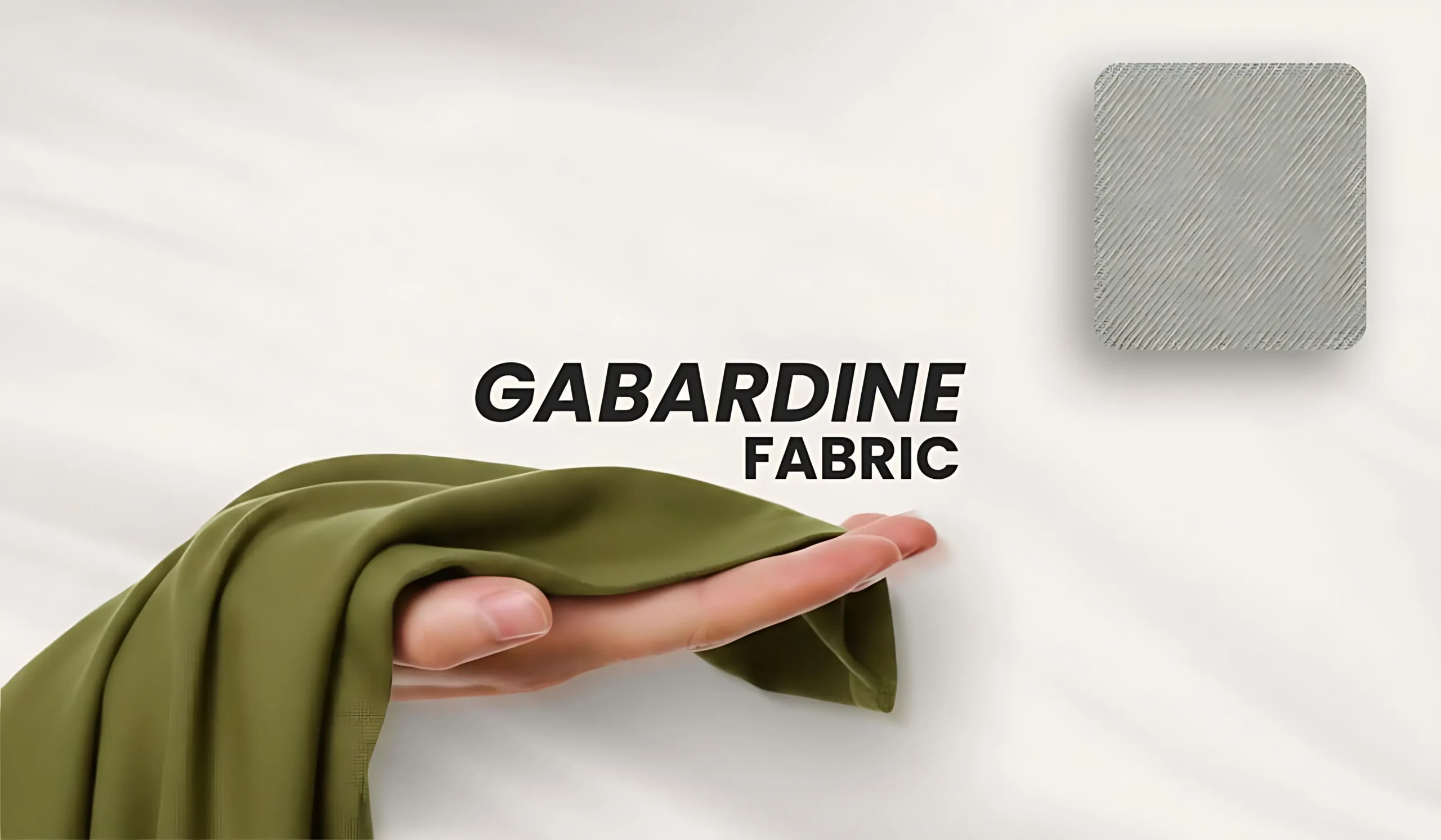
Introduction: What is Gabardine Fabric?
Gabardine fabric is a very durable and tightly woven fabric that is used for different kinds of clothing. It is woven in a twill pattern and contains a steep diagonal rib on top that gives it a very nice finish. Originally, gabardine was made of worsted wool, but now it can be made of cotton and different types of polyester blended to produce a fabric based on what it is used for. It is a fabric that is very durable, somewhat shiny, and holds up very well.
Because of these properties, gabardine fabric can be used for tailored clothing, uniforms, and durable protective clothing for the weather. Gabardine is also wrinkle-resistant, it can shed light rain very easily, and keeps its shape very well. It also has a very nice drape to it and is very breathable.
Due to its numerous properties, Gabardine fabric is highly versatile and can be used for a wide range of clothing items. Typically, however, it is used in clothing pieces that need to be made and worn for long periods of time. Due to its numerous properties, this fabric is highly popular and widely used for various clothing items. It is still popular for its very long useful life that it has.
History of gabardine fabric
Origins (15th–16th centuries): The term gabardine (or gaberdine) originally referred to a long, loose cloak or overgarment dating back to at least the 15th century.Wikipedia+2stories-of-london.org+2 Over time, it became associated with protective outerwear, such as smock-frocks worn by laborers.
Burberry’s Innovation (1879–1888): In 1879, Thomas Burberry developed the modern gabardine fabric, combining a tight twill weave with breathability and water resistance.Wikipedia+2Burberry Plc Corporate+2 He patented his version of gabardine in 1888.Wikipedia+2stories-of-london.org+2
Burberry’s goal was to produce a material that could withstand wind and rain while remaining lightweight and ventilated, a sharp contrast to the heavy rubberized rainwear common at the time.Institute of Historical Research+1
Adoption & Military Use: By the early 1900s, gabardine had caught the attention of the British War Office.Wikipedia
During World War I, its use in military garments helped popularize the iconic trench coat, designed with functional features such as D-rings, epaulettes, and storm flaps.Wikipedia+1
Exploration and Performance: The fabric’s durability and resistance to the elements made it a favorite among explorers. Polar explorers like Fridtjof Nansen used it during his 1893 expedition.Wikipedia+1
Later, Roald Amundsen and Ernest Shackleton wore gabardine in their expeditions, while George Mallory famously attempted Everest wearing a gabardine suit.Treasurie: Free Sewing and Crochet+2lefort.biz+2
20th-Century Fashion Evolution: In the mid-20th century, gabardine transitioned from strictly utilitarian use to fashion. By the 1950s, it was used in patterned jackets, trousers, suits, and more casual wear.Treasurie: Free Sewing and Crochet
Burberry itself developed several “weights” of gabardine (e.g., “Airylight,” “Tropical,” “Double-Weave”) to cater to different needs.Encyclopedia
Manufacturing Process of Gabardine Fabric
Gabardine’s manufacturing consists of a series of activities preparing the fabric for its final design appearance and structuring its characteristic strong twill and smooth-looking surface. Though the first step of raw material selection can be different because the fabric can be of wool, cotton, polyester, or a blend, the general method remains the same.
1. Fiber Preparation and Selection
Of all the fabrications, high-quality worsted wool is the traditional selection for the fabric’s design. However, in a more modern approach, the fabric can incorporate cotton, polyester, and blended yarns. To prepare natural fibers, some cleaning is involved, and carding and combing remove impurities and subsequently align the fibers for an even yarn.
2. Yarn Spinning
Once the fibers are prepared, the next step is spinning the fibers into yarn. Usually, worsted spinning is the method of choice, which means even more smoothing and compacting of the fibers before they are knitted. The yarn counts are dependent on how heavy or light the final fabric is intended to be.
3. Ply Yarn Twisting
For improved performance, yarns are sometimes twisted or plied before weaving. Twisted plied yarns are more resilient, i.e, yarns are less likely to fray and abrade during usage. The amount of twisting is varied depending on the type of fabric and the expected use of the fabric.
4. Fabric Weaving
Gabardine is woven using a steep twill weaving style, most commonly in a 2/1 or 2/2 configuration. This style of weaving produces a fabric with a distinct diagonal rib. The warp yarns are of high density, producing a firm and compact structure. The weaving is normally done using power looms with high control over tension and consistency of the fabric of the resulting fabric pattern.
5. Washing/Scouring
The fabric is washed or scoured after weaving to remove the lubricants and oils used during the spinning and weaving processes, as well as any dirt. This helps to prepare the fabric for finishing and also increases dye absorption.
6. Dyeing
Gabardine can be dyed in two stages, i.e., as a piece good or during the yarn stage. The dyeing process is done with a lot of care to ensure that there is uniform and even dyeing of the fabric without streaks, and that there is consistent dyeing of the fabric. Yarn dyeing is often used when there is a requirement for rich and consistent color in the fabric, especially in high-end tailoring fabrics.
7. Heat Setting (for Synthetic or Blended Fabrics)
If gabardine has a polyester or blended fiber content, heat setting is used to lock in place the fabric structure. This enhances dimensional stability, reduces shrinkage, and makes crease recovery easier.
8. Finishing
The last finishing stage improves the fabric’s handle and appearance. Processes involved are singeing, calendaring, decatizing, or pressing. These treatments smooth out the surface, enhance lustre, and improve drape. Fabrics designed for trench coats and other outdoor garments may also be given a water-repellent finish.
9. Inspection and Quality Control
The completed fabric is inspected for irregularities like an uneven weave, faults in the weaving, changes in color, or surface problems. The fabric, gabardine, also undergoes Quality assurance to guarantee that it meets the standard requirements in strength, appearance, and consistency.
Properties and Characteristics of Gabardine
Gabardine is appreciated for how it stands up to wear and tear, and has an understated elegance that works for custom fitting and outerwear tailoring. The fabric’s steep twill weave and high yarn density add to its structure, durability, creating a texture that is unlike other fabrics. The nature of the fabric may differ depending on whether it is wool, cotton, polyester, or a composite of the three, but several characteristics remain consistence with polyester.
However, several traits remain consistent with the fabric.
1. Physical Properties
Gabardine is known for the unique high level of construction and firm weaving that contributes to the durability and mechanical strength of the fabric. Enhancing the refinement of the fabric, the twill pattern removes any irregularities of the fabric and provides a diagonal rib to it, increasing the wearability and life of the fabric. The fabric has a natural retention that provides the fabric with shape, especially beneficial in tailor-made clothes that require high structuring and detailing.
2. Abrasion Resistance and Durability
The close-weave twill pattern provides high-level durability and resistance to everyday wear, snags, and surface abrasions. Because of this, Gabardine fabric is a popular fabric for the construction of new uniforms, durable workwear, and heavily used trousers. Its extended functional life is a result of little to no wear and loss of material, making it a high-level choice for garments.
3. Wrinkle Resistance and Shape Retention
When it comes to holding its shape and resisting creasing wool-based gabardine, and keeping its shape, wool-based gabardine is better than most balanced weave fabrics. However, some synthetic versions do some heat setting to increase the amount of crease retention and dimensional stability.
4. Breathability and Comfort
Wool gabardine is breathable, regulates temperature, and is comfortable enough to wear throughout the year. Cotton versions are soft and comfortable, while synthetic versions, though breathable to a lower degree, are more durable. Finding the ideal balance between comfort and performance is equipment is most often the deciding factor in selection.
5. Weather Resistance
Gabardine fabric is useful for lightweight, moisture-resistant garments due to its lightweight weave, but water repellent finishes and water-resistant fabrics are often preferred for lightweight trench coats, gabardine military garments, and travel garments to maintain weather protection, flexibility, and breathability.
6. Drape and Aesthetics
Gabardine fabrics have a smooth, sharp drape to them, and even keep a sharp silhouette, all while sitting beautifully on the wearer’s body. They are somewhat satin in nature and have a degree of luster. These are key features in a gabardine fabric to give a sleek, elegant, and professional touch to a garment for drape design, tailored garments, and seasonal wear.
Environmental Impact / Sustainability
Gabardine’s environmental effect is shaped by the fibers used, production techniques, and also the durability of the completed garment; hence, the life cycle analysis is crucial in outlining the fabric’s environmental impact. In its virgin state, wool gabardine to an extent, is the most environmentally impactful due to the land and resource demands of sheep farming, due to the feed production, pasture management, and the water usage and greenhouse gas emissions resulting from livestock.
Cotton gabardine is also resource-intensive, even more so when grown using conventional irrigation and pesticide-intensive farming. There is, however, a reduction of irrigation and other burdens in farming organically and using water-wise practices.
A gabardine of polyester has a somewhat different profile. It has a more favorable impact in that it avoids agricultural problems and often requires less land and water, but it does have a large issue of petrochemical extraction and an energy-intensive polymerization, which shifts the environmental load toward nonrenewable fossil fuel dependence.
Additional water and energy are used in the processes of spinning, weaving, dyeing, and finishing. Gabardine, one such fabric, is tightly woven and has a steeped twill pattern with a dense structure that requires the constant use of a machine.
Environmental finishing treatments, such as dyeing, water-repellent coating applications, or stabilizing, use chemicals and thermal processing. Mills applying modern efficiency methods, such as renewable energy use, closed-loop water systems, chemical management, and heat recovery, suffer much less of an environmental impact than those working conventionally. While the resource use required to manufacture gabardine is substantial, its durability is an environmental advantage in the use phase.
Because gabardine is wrinkle-resistant, maintains its shape, and does not require constant washing or pressing, garments made out of this fabric typically require low maintenance and are serviceable for many years. This maintains a low environmental cost per wear in comparison to fast-fashion fabrics that disintegrate rapidly.
The environmental benefits of such garments styled in timeless silhouettes and made to withstand long-term use are compounded by the fact that they support wardrobe longevity and reduce material turnover overall.
Comparison Table (Gabardine vs Twill vs Poplin)
| Feature | Gabardine | Twill (regular) | Poplin |
|---|---|---|---|
| Weave | Warp-faced, steep twill (tight, more warp) | Twill (diagonal ribs, balanced variants) | Plain weave (fine ribs from warp/weft differences) |
| Density / Strength | Very high (tight, compact) | Medium–high | Lower vs twill/gabardine |
| Surface / Hand | Smooth face, slight sheen, structured | Slight texture from twill ribs | Smooth, lightweight, crisp |
| Breathability | Good (depends on fibre) | Moderate | High |
| Typical Uses | Suits, trench coats, uniforms, trousers | Pants, jackets, workwear | Shirts, dresses, lightweight garments |
| Wrinkle Resistance | High | Moderate | Lower (more prone in lightweight poplin) |
| Weather Resistance | Moderate (can be enhanced by finishes) | Low–moderate | Low |
References
Below are high-quality academic and industry references suitable for a professional textile blog or publication.
- Allen, S. (2021). Textile Manufacturing Processes and Sustainability. Woodhead Publishing.
- Cardoso, A. A. M. (2013). Life Cycle Assessment of Two Textile Products: Contribution of Production and Use Phases. Journal of Cleaner Production.
- Kadolph, S. J. (2014). Textiles (10th ed.). Pearson Education.
- Muthu, S. S. (2017). Assessing the Environmental Impact of Textiles and the Clothing Supply Chain. Elsevier.
- Niinimäki, K. (2018). Sustainable Fashion in a Circular Economy. Aalto University Press.
- The Woolmark Company. (2020). Wool Processing and Lifecycle Overview. Woolmark Industry Guide.
- Ullah, H., & Yousaf, M. (2022). Recycling and Circularity in Textile Systems. Journal of Sustainable Materials.
- United Nations Environment Programme. (2020). Sustainability in the Global Fashion Industry. UNEP Report.
- Wang, L. (2019). Environmental and Resource Challenges in Textile Wet Processing. Textile Research Journal.
Programs
- If you are exploring the idea of starting a fashion brand – Join the Masterclass
- If you are 100% sure of launching a clothing brand or are in the process of launching a clothing brand – Join the Bootcamp
- If you are looking for low MOQ supplier, inquire about the Co-pilot program.
- If you have a private label brand and you are looking to scale up – Join our Private Label Program.
- If you are looking for surplus & Liquidation deals – join our liquidation program.
- If you are not sure about joining the bootcamp, – Join the Masterclass to get a feel of what Bootcamp has to offer and if you still have questions, you can email us at hello@hulaglobal.com
Read more
- How To Start A Fashion Brand?
- Top 10 Couture Brands
- How Big of a Deal is the Supply Chain?
- Top 20 Expensive Clothing Brands
- Iconic Products Made from Leather Jacket
- How Do You Start A High-End Clothing Line?
- Top 50 Products made from Satin
- The Velvet Touch: Unveiling the Opulent World of Velvet Fabric
- What is Viscose fabric?
12 Responses
Thank you for the auspicious writeup It in fact was a amusement account it Look advanced to far added agreeable from you However how can we communicate.
Thank you😄
Nice respond in return of this matter with solid arguments and telling
the whole thing on the topic of that.
I look forward to reading more of your work in the future.
The structure was logical, flowing smoothly from one point to the next, and the examples you provided were relevant and illustrative.
The inclusion of relevant examples and data enhances the credibility of your arguments. Overall, it is a well-crafted document that effectively communicates the intended message. Thank you again for your hard work and dedication to producing such a comprehensive piece.
Nice
Really clear site, appreciate it for this post.
A round of applause for your blog post. Much obliged.
Great, thanks for sharing this blog post. Want more.
Thanks-a-mundo for the blog.Thanks Again. Will read on…
Very good blog article. Great.