

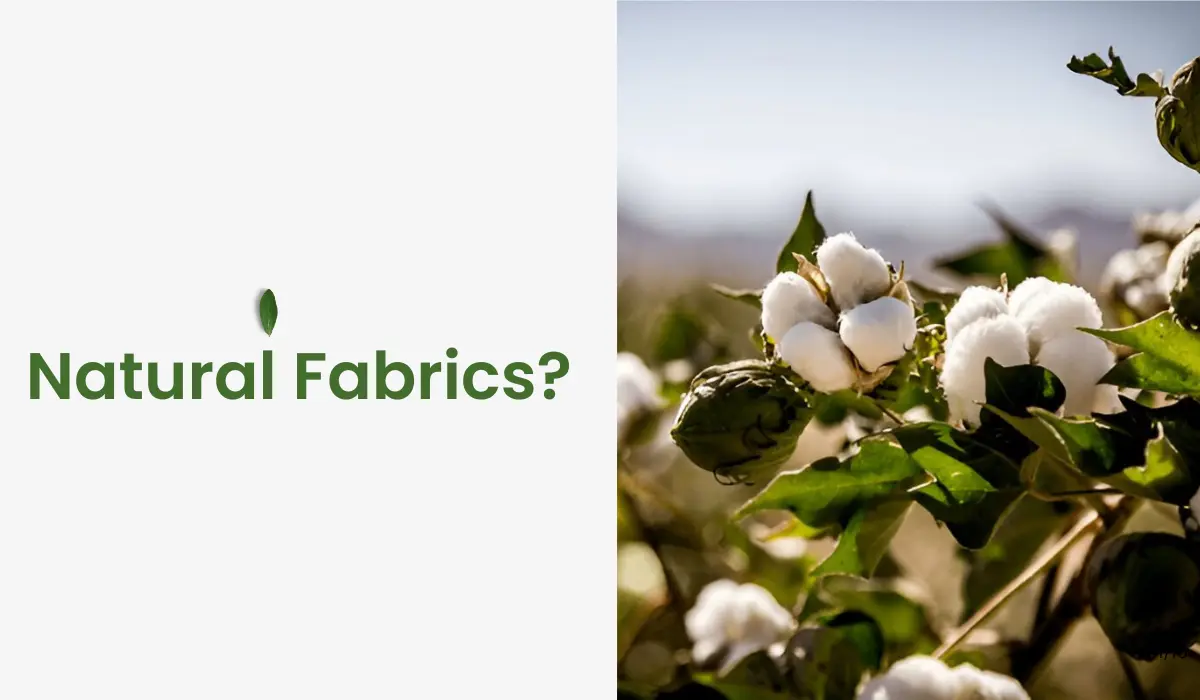
Introduction: What Are Natural Fabrics?
Natural fabrics refer to the materials made of fibers which are obtained by biological means, usually of animal (protein) or plant (cellulose) origin. These substances have been the base of textile manufacturing since thousands of years have passed. By definition, a natural fabric is any cloth in which the main structural fibers consist fundamentally of renewable natural fibers such as cotton, linen (flax), hemp, jute, silk, wool, etc. They are valuable in respect of their properties, which are breathable, biodegradable, comfortable, hygroscopic (absorbs moisture), and easily simple to chemistry. With the world-wide textile and fashion industries moving towards sustainable operations, the importance of natural fabrics is a solution to eco-textile, ethical fashion and sustainable supply networks.
History of Natural Fabrics
The history of natural fabrics is deeply connected with the history of early human civilization and the formation of the world trade. Archaeological records show the man started working on the natural fibers long before the Late Paleolithic, but the earliest known twisted plant fibers, in Dzudzuana Cave, in Georgia, date back to around 34,000 years ago. This development of early fibers reveals the fact that human beings had a sophisticated textile industry much earlier than was thought. [4]
By 5000-6000 BC, cultures in Egypt, Mesopotamia, China, and the Indus Valley had already experienced formal systems of fiber growing, spinning and weaving:
Cotton: Cotton fibers, dated 3000 BCE, are found in the Indian subcontinent both at Mehrgarh and in Mohenjo-daro, showing that cotton cultivation and weaving were developed by the Indian subcontinent long before the dissemination of cotton to other parts of the world. Cotton production in Egypt also grew intensively, becoming an export goods.[3]
Flax/ Linen: The earliest factory-produced fabric. It is evidenced that both the culture and economic value were available as far back as 4000 BCE, with fine linen being wrapped around the mummies seen in Egyptian tombs.[1] [3]
Wool: The domestication of sheep is believed to have taken place in Mesopotamia around 9000-7000 BCE, resulting in the use of wool fabrics being widely used. Wool was used to rule textile production in the world of antiquity in the Near East and all of ancient Europe, given the level of insulation and durability.[1]
Silk: China is thought to have brought about sericulture, and the first recorded silk traces were found in the Liangzhu and Hemudu cultures, dated around 2700-2600 BCE. The silk became a principal commodity in the international trade routes, particularly during the Han Dynasty, and the Silk Road was established.[1] [3]
The use of natural fabrics continued to dominate trade and the industry of Asia, Europe, and the Middle East in the Middle Ages. Textiles like wool were of significant export of Britain and Flanders, and the cotton muslin and calico produced in India were known throughout the world for their exquisiteness. One of the best fabrics of the time was created in the textile workshops in the Mughal Empire.[1]
The 1760-1840 Industrial Revolution signified a change with the use of machines in spinning and power looms. Such inventions significantly amplified the volume of production of natural fibers, rendering cotton the principal fiber of textiles in the world by the nineteenth century.[5] [2]
Natural fabrics have continued to evolve in the 20th and 21st centuries because of the advances in agricultural science, organic farming, enzymatic processing, environmentally friendly dyeing, and the increasing worldwide concern in sustainable material usage.[2]
Origin, Evolution, and Key Innovations
Natural fibers are made of fibers whose origin is directly biological, i.e., plant cellulosic fiber (cotton, flax, jute, hemp, and bamboo), and animal protein fibers (wool, silk, cashmere, and alpaca).
Their evolution dates back to the survival skills of early man, where the communities would have learnt how to twist plant stems, work on animal pelts, and lastly make structured textiles as their means of protection and utility.
Through archaeobotanical and zooarchaeological indications, there have been indications that a structured fiber gathering and spinning regime arose separately in a number of early societies, and this established the basis of local textile cultures.
Early Origins and Evolution
The natural fabrics across the ancient world were developing according to the first fibers that were to be systematically harvested, is the bast fibers, like flax and hemp. Their sheer numbers, tensile properties, and simplicity have allowed Neolithic civilizations to make textiles that could be durable, strands of ropes, and even used in houses. Cotton thrived strongly within the tropical and subtropical areas, notably in South Asia, Africa, and the Americas, where it’s the hair structure of the seed generated soft, breathable materials.
Animal Fibers appeared at the same time as the domestication of the sheep in the early Holocene. Their natural crimp, insulation qualities, and affinity with dyes made them indispensable in colder areas. Silk emerged as a luxury item because of the exclusive fibroin filament produced by Bombay mori, which facilitated the trade routes and luxury items across the expanses of the civilization.
Natural goods gradually shifted to a larger industry as societies progressed in spinning, the use of the loom, and the fiber work.
Natural fabrics were turned into an economically profitable and popular world material that they have become today, because of the technological advancements and agricultural innovations:
Innovations in Retting and in Fiber Extraction:
Better water and dew retting methods enabled the extraction of flaxes and hemp in a cleaner manner, hence increasing the uniformity and length of the fibers.
1. Spinning Advancements:
Introduction to spindle whorls, spinning wheels, and spinning frames, later on, the magnified consistency of the yarn winding and the rate of production tremendously.
2. Loom Technology:
The development of the simple backstrap looms to the vertical looms, the draw looms, and finally the merchandise power loom standardized the structure of the weaving and made the production based on mass.
3. Selective Breeding & Agronomic Improvements:
Improvement of cotton (such as long-staple and extra-long-staples), fine-grade wool of Merino sheep, and regulated practices in sericulture were all important in improving fiber quality.
In the contemporary context, sustainable processing is maintained by a set of objectives aiming to enhance accreditation standards, the transplantation withdrawal procedure, along with the donation caps. Modern technologies like enzymatic scouring, biopolishing, low-impact dyeing, and regenerative agriculture have improved the performance and behavior of natural fabrics, as well as their environmental performance.
All these inventions made natural fabrics the basics elements of the world textile industry, which has proven to be ecologically friendly, versatile, and efficient.
Manufacturing Process of Natural Fabrics
The natural fabric production is a series of standard procedures that transform raw biological fibers into final fabrics. The processes slightly differ with the type of fiber, yet overall, there are fiber selection, preparation, spinning processes, as well as fabric formation and finishing. Every phase affects the mechanical characteristics, feel, wear, and tear, and usability of the end product fabric.
1. Fiber Selection and Harvesting
Plant Fibers (Cellulosic)
Cotton, linen (flax), jute, hemp, and bamboo are plant fibers that are selected in terms of length of staples, fineness, maturity, moisture level, and tensile strength.
- Cotton is rated in terms of staple length (short, medium, long, extra-long) and in terms of trash content.
- Flax and hemp are delicate to cultivate and reap, so as to extract clean bast fibers.
- The jute is harvested during flowering when it is at an optimum fiber strength.
Animal Fibers (Protein-based)
The selection process of wool, silk, alpaca, cashmere, and mohair involves the count of microfibers, crimp, consistency, luster, and yield. Wool has been graded into fine, medium, or coarse relying on diameter (microns), and the quality of silk is determined by the uniformity of the cocoons, length of the filament, and degree of degumming.
2. Pre-processing and Fiber Preparation
Plant Fibers
- Ginning (cotton): Separates fibers from seeds and removes impurities.
- Retting (flax, hemp, jute): Microbial breakdown of pectins to release bast fibers.
- Scutching and Hackling: This is mechanical work that is done to separate long fibers, extract shives, and straighten fibers.
Animal Fibers
- Wool Scouring: Reproves lanolin, grease, suint, and dirt by premeditated washes of detergent.
- Silk Degumming: This step removes the sericin coating to the fine fibroin filament.
These processes precondition the cleanliness, uniformity of the length,and final spinnability of the fibers.
3. Spinning (Conversion into Yarn)
Spinning is a method of preparing fibers in the form of yarn by drafting, twisting, and winding.
- Traditional Spinning: Historically done using spindles and spinning wheels, producing low-volume but high-quality yarns.
- Modern Spinning Systems Ring Spinning: Offers superior strength and evenness; widely used for cotton and wool.
- Open-End Rotor Spinning: Faster and cost-effective; suitable for medium and coarse yarns.
- Worsted & woolen spinning: Specialized systems for wool, depending on fiber length and end use.
- Reeling (Silk): Cocoons are unwound into continuous filaments using hot-water reeling systems.
The spinning procedure directly influences the yarn strength, uniformity, hairiness, as well as cost.
4. Fabric formation: Weaving and Knitting
Weaving
- The natural fibers are usually woven in plain, twill, satin, basket, and dobby constructions.
- Plain weaves suits cotton, linen, and jute.
- Twill weave is relatively very strong in wool suiting and denim.
- Silk fabrics are commonly done in satin weave to achieve the highest amount of luster.
Knitting
- Mostly used with cotton, wool, and bamboo blends.
- Weft knitting: Comfort and stretch are available (T-shirts, hosiery, tops).
- Warp knitting: It is used to make stable fabrics with high volume, which can be used in the industrial and apparel sectors.
5. Finishing Techniques
The finishing will improve performance, appearance and functionality of natural fabrics.
Common finishes include:
- Mechanical Finishes
- Calendaring
- Mercerization (cotton)
- Combing & singeing
- Decatising (wool)
- Finishing Chemical and Finishing Functional.
- Enzymatic bio-polishing
- Anti-shrink, anti-pilling, and anti-crease finishes.
- Low-impact dyeing
- Natural and azo-free dye processes.
- Waterproof (or fireproof) coatings (not mandatory)
- Sustainable Finishing
More and more advanced low-water, low-energy methods are being employed, like foam finishing, laser treating and processing using plasma to reduce environmental impact.
Properties & Characteristics
1. Breathability
One of the reasons natural fabrics have maintained their relevance, even in a market flooded with technical synthetics, is their genuinely breathable structure. This isn’t marketing language; it’s rooted in the way cellulose and protein fibers are built. Cotton, linen, and similar plant fibers have a slightly uneven, twisted geometry (cotton’s “convolution,” for example) that naturally opens up micro-channels for air to pass through. This is why these fabrics don’t trap heat close to the skin. Wool breathes differently: its surface scales and internal crimp create tiny pockets that allow air circulation while still offering insulation. So breathability, in natural fabrics, isn’t a single mechanism: it’s a combination of structural irregularity and natural porosity that synthetics try to imitate but rarely match in comfort.
2. Moisture Absorption & Wicking
Natural fibers have the ability to absorb moisture into the core of the fiber itself, a property called hygroscopicity. Cotton can take in about a quarter of its own weight without feeling noticeably wet, and wool can absorb even more due to its unique protein structure. But the interesting part is not just the absorption; it’s what happens afterward. Linen and hemp, for instance, release moisture quite rapidly, so the fabric never feels swampy or suffocating. Wool manages moisture differently: it pulls humidity away from the skin and traps it inside the fiber’s cortex, which helps maintain a dry microclimate. Each natural fiber manages moisture with its own rhythm, and this variability is actually what makes them so adaptable across climates.
3. Strength & Longevity
Strength in natural fabrics varies dramatically depending on the fiber, but some of them are surprisingly robust. Bast fibers like flax (linen) or hemp are structurally rigid: Their cellulose molecules form tightly packed fibrils that resist breaking, which explains why linen tablecloths and hemp ropes last for years. Cotton isn’t as strong when dry, but it becomes stronger when wet, which is why it has been used traditionally for wash-heavy textiles. Wool’s strength works differently; it’s not about tensile strength but elasticity. A wool fiber can stretch and recoil without losing its shape, making it resistant to tearing and abrasion in everyday use. These differences explain why natural fabrics appear across both delicate apparel and rugged industrial materials.
4. Elasticity & Shape Behavior
Elasticity varies widely among the natural fibers. Wool is naturally elastic because of its protein structure forms a spiral, enabling the fiber to stretch and return to its original shape. This explains why wool garments don’t wrinkle easily. Cotton, linen, and hemp lack this elasticity due to the rigidity of cellulose chains, which means they crease more readily. Silk has moderate elasticity and takes on a graceful drape, but it can lose strength when wet. These differences influence how natural fabrics are used: wool for sweaters and tailoring, linen for breathable garments, and silk for fluid apparel that requires movement.
5. Comfort & Skin Interaction
People often describe natural fabrics as “comfortable,” but the reason is more technical than sentimental. Cotton’s surface structure is soft and non-abrasive, making it gentle even for people with sensitive skin. Fine wool varieties, like Merino, manage humidity so efficiently that they reduce the clammy feeling often associated with synthetic materials. Silk, with its smooth, filament-like fibers, glides over the skin without friction. Natural fibers also tend to have better thermal comfort because they allow the skin to breathe rather than trapping sweat. This is why, historically, natural fabrics became the default choice for garments worn directly on the skin.
6. Texture, Drape & Aesthetic Qualities
One reason designers continue to favor natural fabrics is their inherent visual and tactile richness. Cotton can be woven into anything from crisp poplin to soft jersey, giving it incredible versatility. Linen has its signature uneven texture, a look that feels organic rather than artificial. Wool varies dramatically, from coarse, rustic tweeds to buttery-soft Merino, depending on fiber diameter and finishing. Silk possesses a natural sheen due to the triangular shape of the fiber cross-section, which refracts light in a soft, diffused way. These aesthetic qualities arise naturally from the fiber structure and don’t need heavy surface treatments, which is why natural fabrics age gracefully rather than looking worn out.
Application of Natural Fabrics
Natural fabrics continue to anchor some of the most essential sectors of global manufacturing because their performance is rooted in biology rather than engineered chemistry. In apparel, they remain indispensable, not as a nostalgic choice, but because they solve problems synthetics still struggle with. Cotton dominates mainstream clothing for its comfort, moisture absorption, and ability to withstand repeated laundering without losing structural integrity. Linen finds its niche in summer wear and premium resort clothing because of its unique heat-dissipating ability and the crispness that comes from its long, smooth flax fibers. Wool plays a different role altogether; its thermal regulation and natural elasticity make it suitable for knitwear, tailoring, outerwear, and performance layers designed for long-term wear. Silk’s relevance persists in luxury fashion, scarves, couture garments, and even lingerie due to its natural luster, lightness, and subtle drape. Each fiber creates a different kind of garment ecosystem: cotton for everyday durability, linen for climate-responsive comfort, wool for insulation, and silk for elegance and fluidity.
Beyond clothing, natural fabrics form the backbone of several technical and household textile categories. In home furnishing, cotton and linen dominate bedding, curtains, towels, table linens, and upholstery because they age gracefully and respond well to repeated washing. The high tensile strength of bast fibers like linen and hemp allows them to be used in upholstery textiles that must endure friction and weight over long periods. Wool’s flame-resistant properties make it a reliable material for residential rugs, carpets, and thermal blankets. Silk, despite being delicate, appears in premium drapery and interior décor accent pieces due to its sheen and dimensionality. Each textile interacts with interior spaces differently, contributing both functional and aesthetic value.
Natural fabrics also have significant industrial applications, though this part is often overlooked. Jute, coir, hemp, and other coarse natural fibers support packaging industries, geotextiles for soil stabilization, agricultural nets, ropes, sacks, and composite reinforcement. These materials perform well in applications that benefit from biodegradability and mechanical strength, sectors where synthetic fibers pose environmental burdens. In medical and hygiene products, purified cotton remains the standard for bandages, gauze, and absorbent pads because it is non-irritating, sterilizable, and physiologically compatible with skin. Wool is increasingly used in specialty insulation materials, including soundproofing panels, because its crimped structure traps air effectively without relying on synthetic foams. Even the automotive industry is revisiting natural fibers: flax and hemp composites are now used in door panels, interior trims, and lightweight structural components due to their stiffness-to-weight ratio and reduced environmental impact.
The craft and artisanal sectors also rely heavily on natural fabrics. Handloom weaving, block printing traditions, embroidery cultures, and dyeing communities, from India to Japan to West Africa, use cotton, silk, and wool because these fibers bond beautifully with natural dyes and hold intricate craftsmanship better than synthetic alternatives. Linen and hemp fabrics are resurging among designers who prioritize low-impact materials, especially in slow-fashion labels that emphasize traceability and material honesty. The tactile richness and visual irregularities of natural fabrics, qualities impossible to replicate perfectly in synthetic materials, make them integral to heritage textile practices.
Even in the context of sustainability transitions, natural fabrics are expanding into new roles. Organic cotton and low-water flax (linen) are supporting environmentally responsible fashion lines, while closed-loop wool processing is strengthening circular textile system in Europe and Australia. Bio-based performance finishes, enzyme-based processing, and regenerative agriculture are making natural fabrics relevant in technically demanding applications where, historically, synthetics dominated. What emerges from this landscape is not a romanticized return to the past but a practical shift where natural fibers are being re-engineered, within their biological limitations, for modern performance expectations.
Commercial and Industrial uses
Natural fabrics occupy a far wider commercial landscape than most people imagine. While they’re often discussed in the context of clothing, their economic significance extends into multiple manufacturing sectors. In mainstream retail, cotton remains the backbone simply because it supports a stable supply chain and predictable performance on standard machinery. Manufacturers rely on it for its consistency: it handles dyeing well, tolerates heavy laundering, and offers a familiar hand feel that consumers trust
This makes cotton ideal for high-volume products like T-shirts, denim, children’s wear, uniforms, and everyday intimate garments. Its durability also allows brands to reduce quality complaints, which is why fast-fashion and premium labels both invest heavily in cotton-based lines.
Linen, although positioned as a premium material, has gained commercial value as brands shift toward climate-responsive and sustainability-driven collections. Its ability to dissipate heat quickly gives it an advantage in warm-weather apparel, resort wear, and hospitality uniforms. Luxury hotels, for instance, prefer linen for bedding and high-contact textiles because it stays crisp and breathable even with repeated use.
Wool supports a different commercial segment. Its natural elasticity, insulation, and resilience allow it to dominate structured garments, tailored coats, suits, sweaters, and winter accessories. Retailers choose wool not only for its warmth but also for its longevity; wool garments maintain shape over time, reducing returns and extending product lifespan.
Silk anchors the premium and couture market, where drape, sheen, and tactile richness carry commercial weight. It remains a staple in luxury apparel, scarves, fine dresses, and couture ateliers. Craft clusters, especially in South and East Asia, also rely heavily on silk for heritage weaving traditions that cannot be replicated with synthetic alternatives.
Jute and coir continue to be vital in packaging, shipping, and agricultural logistics. Their combination of tensile strength and biodegradability gives them an edge over synthetic alternatives.
Flax and hemp are now also being used in automotive interiors, dashboard panels, door trims, and lightweight reinforcement structures. Their high stiffness-to-weight ratio allows manufacturers to reduce plastic content while keeping components strong and stable.
The medical industry still relies heavily on purified cotton because no synthetic material can match its mix of absorbency, sterilizability, and skin compatibility. This is why cotton remains on top choice for surgical dressings, cotton rolls, sanitary pads, bandages, and a wide range of non-woven medical disposables.
Wool has also found relevance in technical insulation and acoustic panels used in eco-friendly buildings. Its natural flame resistance and ability to trap air without releasing toxic fumes make it a safer option than many older synthetic foams.
Commercial home furnishing form another major sector where natural fabrics dominate. Cotton and linen remain staples in upholstery, curtains, bed linens, table fabrics, and interior textile because they combine everyday practicality with design flexibility.
Types of Natural Fabrics
1. Cotton
Short-staple cotton is used for everyday clothing and household textiles, while long-staple varieties offer a smoother, premium finish for bedding and luxury apparel. Organic cotton represents the pesticide-free variant preferred in sustainable fashion.
2. Linen
Flax-based linen appears in different grades: premium linen for fine garments and interiors, and tow linen for sturdier applications. These variations differ mainly in smoothness, weave quality, and durability.
3. Hemp
Raw hemp retains a coarse, sturdy texture suitable for heavy textiles, while mechanically or enzymatically softened hemp resembles linen for apparel. Hemp-cotton or hemp-linen blends are common where added softness is needed.
4. Jute
White jute is lighter and softer for decorative products, whereas Tossa jute is stronger and used in industrial-grade textiles. Jute blended with cotton or wool creates flexible, more refined fabrics for lifestyle and interior items.
5. Wool
Merino offers fine, soft fibers for high-quality clothing; medium-micron wools work well for structured garments; and coarse wools are used for carpets, insulation, and technical textiles requiring durability.
6. Silk
Mulberry silk is smooth and uniform for luxury wear; Tussar has a textured, natural sheen; Eri is soft and matte for comfort fabrics; and Muga provides a rare golden luster used in premium traditional textiles.
Environmental Impact and Sustainability
Natural fabrics have an overall positive environmental profile, but their impact varies depending on the specific fiber, agricultural practices, and finishing methods used. Fibers like cotton, linen, hemp, wool, and silk all behave differently across their life cycles. Linen and hemp rank among the most sustainable natural fibers because their cultivation requires significantly less water, minimal pesticides, and improved soil health through low-input farming. Cotton, however, sits on the opposite end of the spectrum: conventional cotton is linked to intensive water consumption and heavy chemical use, which makes its sustainability largely dependent on organic, regenerative, or BCI-certified farming.
Processing also shapes the environmental footprint of natural fabrics. Mechanical retting for flax and hemp is comparatively low-impact, while chemical retting or intensive dyeing of cotton may introduce pollutants if wastewater treatment is inadequate. Wool production involves animal husbandry, which brings methane emissions and land-use concerns, yet wool’s long lifespan and natural biodegradability help balance its overall impact. Silk, too, is biodegradable but can carry ethical and environmental complexity depending on sericulture methods and energy used during reeling and degumming.
Finishes and treatments influence sustainability as well. Undyed, minimally processed natural fabrics have the smallest ecological burden, whereas chemically bleached, resin-treated, or wrinkle-resistant textiles introduce additional environmental costs. Some treatments rely on formaldehyde-based resins or synthetic softeners, which can undermine the renewable nature of the fiber. In response, manufacturers are adopting low-impact dyes, plant-based softeners, and water-efficient finishing technologies that preserve the natural integrity of the fabric while reducing pollution.
Pure natural fibers are biodegradable under proper conditions, returning to the soil. However, once blended with synthetics or coated with chemical finishes, their ability to decompose decreases significantly. The sustainability of natural fabrics depends on the integrity of each stage. With advancements in regenerative farming, closed-loop dye systems, and chemical-free finishing, natural fabrics continue to evolve toward a more environmentally responsible future while remaining aligned with both ecological and commercial demands.
Natural Fabrics vs Synthetic Fabrics
| Feature | Natural Fabrics (Cotton, Linen, Hemp, Wool, Silk) | Synthetic Fabrics (Polyester, Nylon, Acrylic) |
| Source | Renewable, plant or animal origin | Non-renewable, petrochemical-based |
| Biodegradability | Biodegradable under proper conditions | Non-biodegradable; contributes to microplastic pollution |
| Breathability | Highly breathable; regulates moisture and temperature | Limited breathability; traps heat and sweat |
| Durability | Moderate to high (varies by fiber type) | High tensile strength, abrasion-resistant |
| Comfort | Soft, skin-friendly, hypoallergenic for most fibers | Can feel rough or less comfortable; may cause irritation |
| Environmental Impact | Lower if grown/ processed responsibly; natural fertilizers | High energy use, Chemical-intensive, non-renewable |
| Applications | Apparel, home textiles, industrial textiles, and luxury goods | Sportswear, outerwear, industrial textiles, low-cost fashion |
Notes:
- https://textileheritagemuseum.org/textiles-ancient-times-to-modern-day/
- https://textileexchange.org/hemp/
- https://www.britannica.com/topic/textile
- https://www.textileschool.com/345/history-of-fibres-natural-and-manmade-fibres/
References:
- https://textilementor.com/everything-about-natural-fibers/
- https://textileexchange.org/hemp/
- https://www.lancasterhistory.org/brief-history-of-natural-fibers/
- https://www.fibre2fashion.com/market-intelligence/texpro-textile-and-apparel/textile-guide/10577/hemp-yarn
- https://www.textileschool.com/345/history-of-fibres-natural-and-manmade-fibres/
- https://www.textileschool.com/345/history-of-fibres-natural-and-manmade-fibres/
- https://www.britannica.com/topic/textile
- https://www.sciencedirect.com/science/article/pii/S2772912525000752
- https://www.mdpi.com/2079-6439/13/9/119
- https://www.mdpi.com/2073-4360/13/24/4280
We hope this list of What Are Natural Fabrics? gave you a good starting point for you to build something that stand the test of times. If you are looking to start a clothing brand, we recommend that you read our guide – how to start a clothing brand.
If you have already started a fashion brand and you are looking for suppliers, do read our guide on how to find clothing manufacturers and do not forget to download our checklists. If you want to get in touch with us, please connect with us here.
We also have a separate section – Commonly asked questions about the most expensive clothing brands, it is worth checking out.
Wanna get in touch with us. You can also Book a 1-on-1 Call Session BOOK NOW